Becoming a Dentist in Canada is a rewarding career path that combines healthcare, science, patient care, and long-term professional stability. Many students interested in oral healthcare often ask how to become dentist in canada and how many years of education and training are required before entering professional practice.
The path toward earning a dental degree in Canada involves years of academic preparation, clinical training, licensing examinations, and professional development. Although the process can be demanding, dentistry continues to attract students because of its strong career opportunities, financial stability, flexible work environments, and ability to improve patient health and confidence.
At the same time, becoming a Dentist also comes with important challenges. Admission into canadian dental universities is highly competitive, tuition costs can be expensive, and dental education requires strong academic performance and technical skill development.
Understanding both the rewards and realities of the profession helps students make more informed decisions before pursuing dentistry as a long-term career.
How Long Does It Take to Become a Dentist in Canada?

For most students, becoming a dentist in Canada typically takes between six to ten years depending on the educational pathway chosen.
The timeline usually includes:
- Two to four years of undergraduate education
- Four years of dental school
- Additional residency or specialty training if pursuing advanced dentistry
Some students complete only the minimum dental prerequisites before applying to dental school, while others finish a full bachelor’s degree before admission.
After completing a dental degree, graduates must also pass licensing examinations before becoming fully licensed dentists in Canada.
Students pursuing dental specialties such as orthodontics, oral surgery, or pediatric dentistry may require several additional years of postgraduate training.
Because of the academic intensity and competitive admissions process, planning early is extremely important.
Requirements for Dental School in Canada
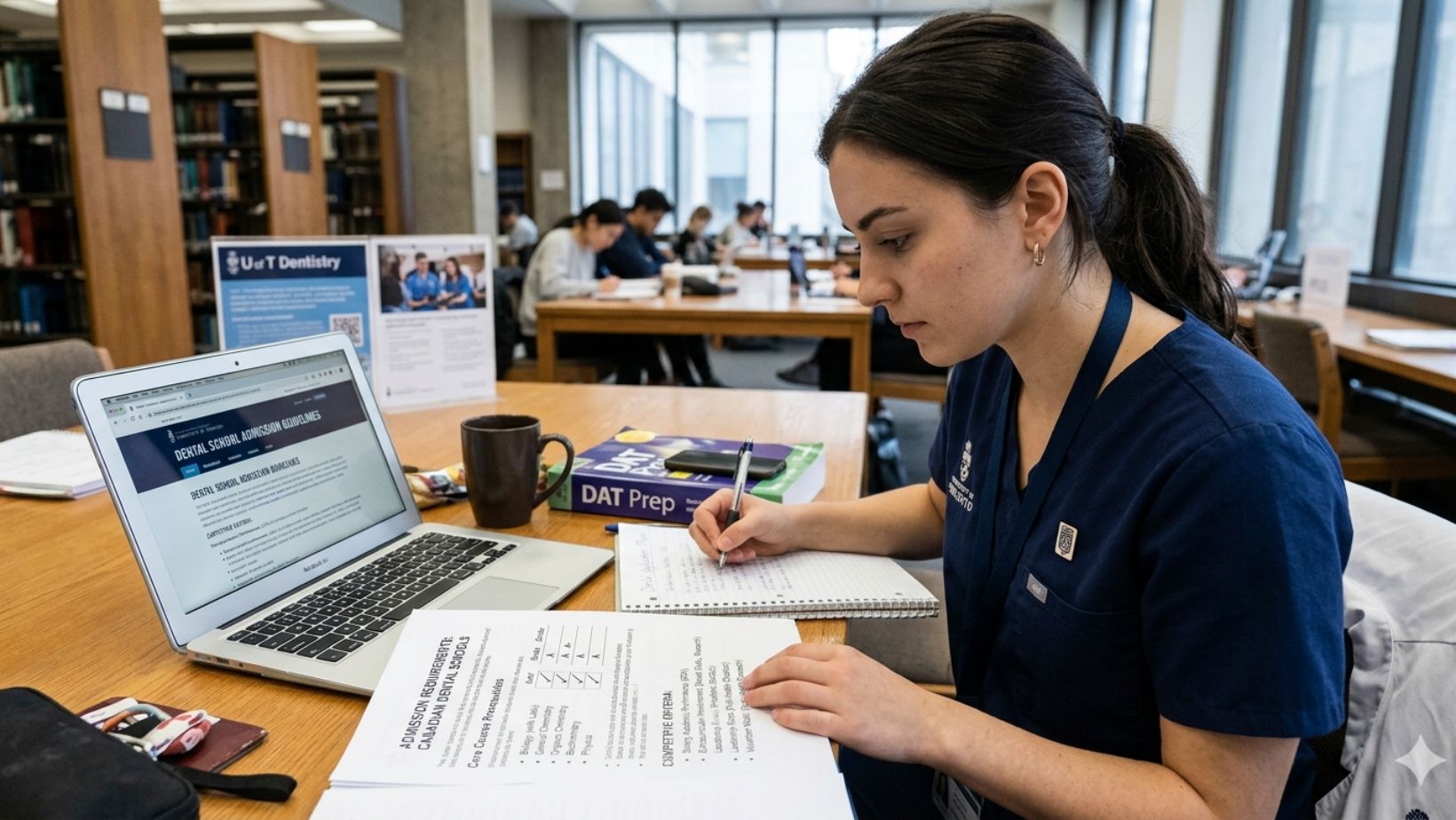
Understanding the requirements for dental school in canada is one of the first steps for students considering a dental career.
Canadian dental schools are highly competitive and generally require strong academic performance in science-based undergraduate courses. Most applicants complete coursework involving:
- Biology
- Chemistry
- Organic chemistry
- Biochemistry
- Physics
Strong grades, extracurricular involvement, leadership experience, and volunteer work may also improve admission competitiveness.
Many Canadian dental universities also require applicants to complete the Dental Aptitude Test (DAT), which evaluates academic skills, scientific understanding, perceptual ability, and manual dexterity.
Healthcare-related volunteer experience may also strengthen applications because dental schools often value communication skills, professionalism, and patient-centered interests.
Dental Prerequisites for Canadian Dental Schools
Dental prerequisites vary slightly depending on the institution, but most canadian dental universities require students to complete foundational science courses before admission.
Common dental prerequisites include:
- General biology
- General chemistry
- Organic chemistry
- Biochemistry
- English or writing courses
- Physics
Some universities may also recommend additional coursework involving anatomy, physiology, or social sciences.
Students should carefully review admission requirements for each school because prerequisite expectations may differ between institutions.
A strong academic foundation is critical because dental school programs are academically intensive and require advanced scientific understanding.
Can You Go to Dental School With a Chemistry Degree
Many students ask can you go to dental school with a chemistry degree when planning undergraduate studies.
The answer is yes. A chemistry degree is often considered a strong pathway toward dental school because it includes many of the science courses required for admission.
Chemistry programs may help students develop:
- Analytical thinking skills
- Laboratory experience
- Scientific problem solving
- Research abilities
Since chemistry coursework overlaps heavily with dental prerequisites, students with chemistry degrees are often well-prepared for dental school admissions requirements.
However, students from many different academic backgrounds may still apply successfully as long as they complete the required prerequisite courses.
Canadian dental universities generally focus more on academic performance, prerequisite completion, and overall applicant strength rather than requiring one specific undergraduate major.
What Students Learn During a Dental Degree
A dental degree combines academic learning, laboratory training, and clinical patient care experience.
Dental students study areas such as:
- Oral anatomy
- Dental pathology
- Pharmacology
- Patient assessment
- Restorative dentistry
- Preventive care
- Oral surgery
- Radiology
As students progress through dental school, they begin working directly with patients under professional supervision.
Clinical training becomes increasingly important because students must develop technical precision, communication skills, and patient management abilities.
Some students also explore research opportunities, public health dentistry, or specialized clinical interests during training.
The transition from classroom learning to clinical care is one of the most challenging but valuable parts of dental education.
Benefits of Becoming a Dentist in Canada
Pursuing a dental career offers several long-term advantages despite the demanding educational process.
Strong Career Stability
Dentistry remains one of the most stable healthcare professions in Canada. Demand for oral healthcare services continues growing due to population growth, aging populations, and increased awareness of preventive dental care.
Financial Opportunities
Dentists often earn competitive incomes, particularly after establishing long-term practices or specializing in advanced areas of dentistry.
Professional Independence
Many dentists eventually operate their own clinics, providing greater flexibility and autonomy compared to some other healthcare careers.
Positive Patient Impact
Dentists play a major role in improving oral health, reducing pain, restoring function, and enhancing patient confidence.
Variety of Career Paths
Graduates may work in:
- Private practice
- Hospitals
- Public health
- Research
- Academia
- Specialized dental fields
Some professionals may also collaborate closely with a medical doctor dentist team in multidisciplinary healthcare environments involving oral surgery or complex patient care.
Challenges of Becoming a Dentist in Canada

Although dentistry offers many rewards, the path toward becoming a dentist also involves important challenges.
Competitive Admissions
Admission into Canadian dental universities is highly competitive due to limited seats and strong applicant pools.
Lengthy Education
Completing a dental degree and obtaining licensure requires many years of demanding education and clinical training.
Financial Costs
Dental school tuition, equipment costs, and educational expenses may create significant financial pressure for students.
Academic Intensity
Dental education requires strong performance in both scientific coursework and technical clinical skills.
Physical and Mental Demands
Dentistry can involve long hours, repetitive movements, and stressful patient situations that may contribute to fatigue or burnout if not managed carefully.
Understanding these realities helps students prepare more effectively for the profession before committing to the career path.
Career Opportunities After Dental School
After completing a dental degree and obtaining licensure, graduates may pursue various professional opportunities depending on their goals and interests.
General dentists often provide:
- Preventive care
- Restorative treatment
- Cosmetic procedures
- Patient education
- Oral health management
Some graduates continue into specialty training involving:
- Orthodontics
- Oral surgery
- Pediatric dentistry
- Endodontics
- Periodontics
Others may pursue careers involving education, research, healthcare leadership, or public health dentistry.
The flexibility of the profession allows dentists to shape careers based on personal interests, lifestyle preferences, and long-term goals.
Is Dentistry the Right Career for You?
Students considering how to become dentist in canada should carefully evaluate both the rewards and challenges of the profession.
Dentistry may be an excellent fit for individuals who:
- Enjoy science and healthcare
- Have strong communication skills
- Prefer hands-on clinical work
- Value long-term patient relationships
- Possess attention to detail
- Are comfortable with continuous learning
At the same time, students should also be prepared for the educational intensity, financial investment, and professional responsibilities associated with the field.
Researching Canadian dental universities and understanding the full career pathway can help students make more informed educational decisions.
Conclusion
Understanding how to become dentist in canada involves much more than simply completing dental school. The journey requires years of academic preparation, clinical training, licensing examinations, and professional development.
Although earning a dental degree can be challenging, dentistry continues to offer strong career stability, professional flexibility, financial opportunity, and meaningful patient impact.
By understanding the requirements for dental school in canada, completing the necessary dental prerequisites, and preparing for the realities of the profession, students can build a stronger foundation for long-term success.
For students preparing for competitive healthcare education pathways, MDconsultants Prep provides professional guidance and educational support designed to help future healthcare professionals navigate admissions preparation, academic planning, and long-term career development.