For many medical school applicants, interviews can feel like the most intimidating part of the application process. Unlike written applications, where you have time to edit, revise, and reflect, interviews ask you to communicate who you are right on the spot. For quieter or more introverted applicants, this can feel especially daunting.
I know this feeling well. When I was applying to medical school, I did not feel like interviewing came naturally to me. I was a re-applicant, had gone through gap years after graduation, and had experienced multiple interviews and waitlists before ultimately being accepted to the University of British Columbia as an out-of-province applicant. Many-a-times, I received feedback that I sounded monotone. At first, that was discouraging to hear because I thought I would never be the kind of person to be interesting when I spoke or articulate with my ideas. However, I realized over time that interview skills can be learned, practiced, and improved with the right mindset and strategy.
If you are a quieter applicant, here are some quick tips that may help you approach MMI, MPI, and panel interviews with more confidence.
1. “Fake it till’ you make it”

One of the most helpful things I did was I stopped making excuses that I was quiet or introverted and that I couldn’t do anything about it. You have to tell yourself, “Yes, I am outgoing. Yes, I am well-spoken. Yes, talking came naturally for me.” The act of putting yourself in a positive or growth mindset is the first and most important step. Your thoughts shape how you act, how much you’re able to grow and how you will perform in your interviews.
2. Build structure before adding polish
When applicants feel nervous, it is common to either ramble or freeze. Having a structure can help you stay grounded. For me, the simplest structures worked the best. My interviews often suffered when I focused too much on giving an elaborate answer with 3+ points.
For personal questions:
1. Directly answer the question.
2. Share a specific example.
3. Reflect on what you learned (CANMEDS).
4. Connect it to medicine or your future growth.
For ethical or scenario-based questions, you might:
1. Identify the main issue.
2. Acknowledge the perspectives involved.
3. Explain what additional information you would want.
4. Describe a balanced course of action (best middle ground).
Once the structure becomes familiar, you can focus more on sounding natural, confident and relatable.
3. Practice warmth, pacing, and emphasis
If you have ever been told that you sound monotone, too quiet, or not enthusiastic enough, it can feel personal. However, this is something you can improve on.
To understand what makes a good speaker, you have to know what one looks like. Choose a public figure you admire and watch their interviews. Notice habits they have that make it easy to listen, like and relate to them.
Based on my experience, these were the things I worked on:
– Slow down slightly when explaining an important point.
– Pause after a meaningful reflection.
– Emphasize key/important words in your answer.
– Let your tone rise when discussing something you care about.
– Smile! I found smiling actually helped me talk less flat.
– Use hand gestures to make the conversation more interesting.
One exercise I found helpful was recording myself answering a question, then listening
and watching with three things in mind: pacing, emphasis, and warmth. Although
listening to yourself can feel uncomfortable at first, it is one of the fastest ways to notice
patterns and improve.
4. Prepare stories that genuinely excite you, not scripts
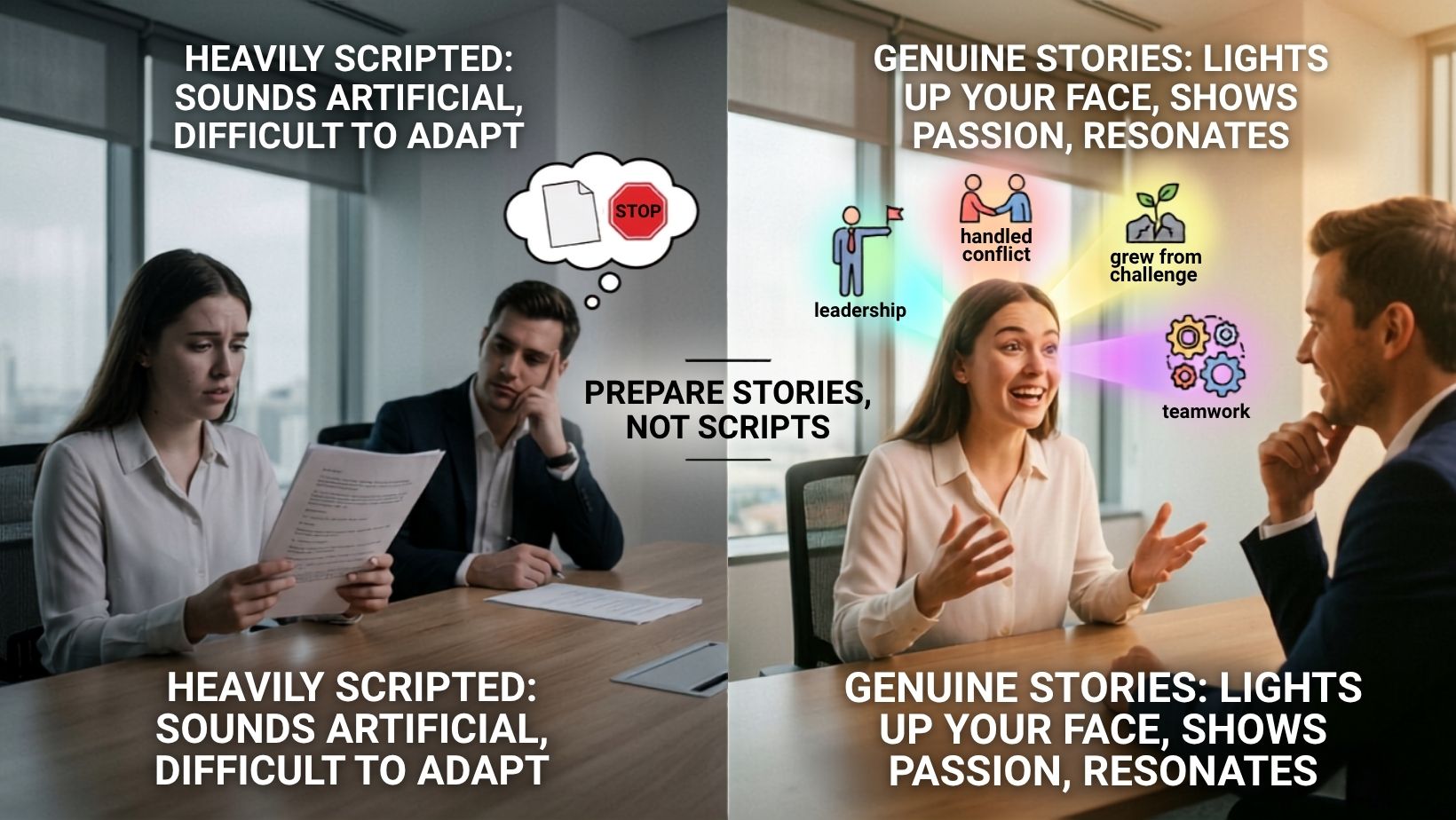
It can be tempting to memorize answers, especially if you are worried about freezing during your interview. However, heavily scripted answers often sound less natural and can be difficult to adapt when questions are worded differently.
Prepare a bank of stories that genuinely excite you. These might include moments when you demonstrated leadership, handled conflict, received feedback, advocated for someone, worked with a team, made a mistake, grew from a challenge, etc. For each story, know what happened, what you did, what you learned, and why it matters.
I say choose stories that genuinely excite you because that will shine during your interview. It is hard to come off as passionate when the story you chose doesn’t actually resonate with you. When you talk about a story or accomplishment that meant a lot to you, it will show in the way you talk and the way your face lights up.
5. Do not wait until you feel confident to start practicing
Many students think they need to feel confident before they begin mock interviews. In reality, confidence often comes after repetition. The first few practice sessions may feel awkward, but that does not mean you are doing badly. It means you are building a new skill.
I remember that I would procrastinate practicing for interviews because I felt anxiety around how I would be perceived. The best way to combat interview anxiety is to start with low-pressure practice. Answer questions out loud by yourself without timing. Practice with a friend. Record one answer a day. Then gradually move toward more realistic mock interviews with timing, follow-up questions, and unfamiliar prompts.
After each practice session, identify one thing to improve rather than trying to fix everything at once. The order of important things to fix in my opinion is: (1) actually answering the main question (2) structure (3) sounding too rehearsed or vague (4) delivery (emphasis, tone, volume, etc.) (5) non-verbal cues (body language, hand gestures, smiling, etc.)
Remember! Small, repeated improvements build confidence over time.
Final thoughts
Medical school interviews can feel overwhelming, especially if confidence does not come naturally to you. But you are not alone and you will improve! If you are a quieter applicant, give yourself time to improve slowly. Practice regularly, ask for feedback, reflect on your progress, and remember that confidence is built over time! You are allowed to be calm and timid while still being a strong interviewee.
Good luck!