The difference between a doctor and an attending physician comes down to training stage and responsibility. “Doctor” is a broad title for anyone who holds a doctoral degree, including physicians still in training. An attending physician is a fully licensed doctor who has completed residency, holds hospital privileges, supervises trainees, and is ultimately responsible for a patient’s care. Every attending is a doctor, but not every doctor is an attending.
You have probably heard both words in the same hospital hallway and wondered whether they mean the same thing. Let’s talk it through the way a senior resident would explain it on your first rotation.
Understanding the difference between a doctor and an attending physician is really about understanding the ladder of medical training.
The Difference Between a Doctor and an Attending Physician in Plain Language
Here is the short version of the difference between a doctor and an attending physician. “Doctor” is a general title. It can describe a physician with an MD, DO, or MBBS, but also a dentist, a veterinarian, or someone with a PhD.
“Attending physician” is a specific job title. It describes a doctor who finished residency, passed the licensing exams, and now practises independently. The attending is the one whose name is on the chart and who carries final legal and ethical responsibility for the patient.
So the difference between a doctor and an attending physician is the difference between a broad label and a precise role. A first-year resident is a doctor. A surgeon with fifteen years of practice is also a doctor. Only the second one is attending.
In Canada you will often hear “staff physician” or “most responsible physician” instead. The idea is the same, and the difference between a doctor and an attending physician works out the same way.
Who Is Higher: Attending or Resident?

The attendance is higher. Residents are licensed physicians who are still training under supervision. They examine patients, write orders, and make plans, but an attending reviews and signs off on their decisions.
The usual ladder behind the difference between a doctor and an attending physician looks like this:
- University: you build your academic foundation and your story.
- Medical school: you learn the science and begin supervised clinical work.
- Residency: you train in a specialty for several years, moving up from first-year to chief resident.
- Fellowship (optional): you subspecialize further.
- Attending physician: you practise independently and teach the next generation.
Notice that residency is the bridge that explains the difference between a doctor and an attending physician. The length depends on the specialty, and our guide on how many years of residency for general surgery shows how much it can vary. If you want the full picture of what that bridge looks like, read what residency is for a doctor.
Understanding the Difference Between a Doctor and an Attending Physician Through Training
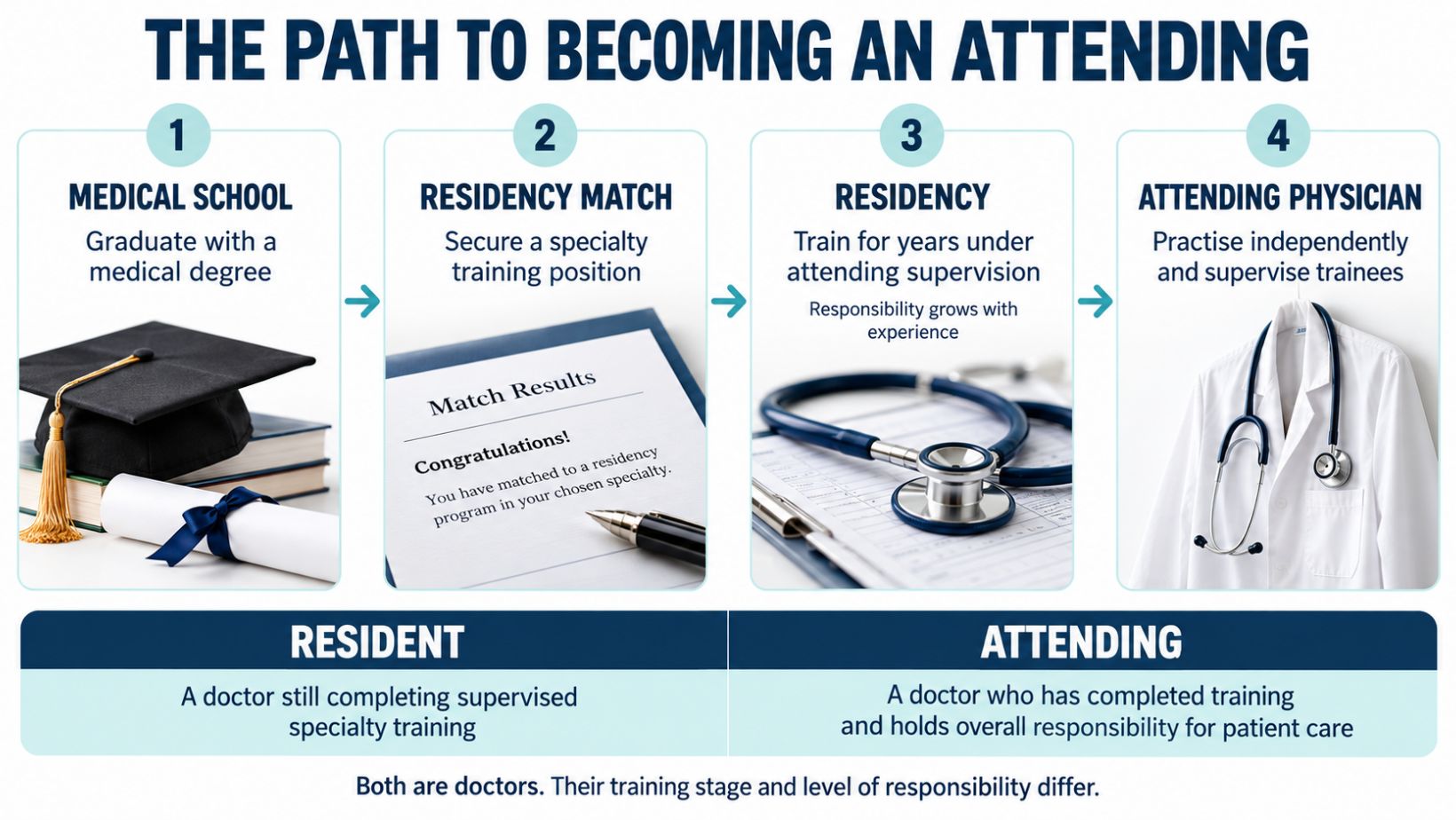
Getting to the attending level is a long road, and it is worth being honest about that. After finishing medical school, graduates must secure a position through the national matching system. If that process is new to you, our articles on the Match process for residency programs and how the NRMP Match works explain every step.
Once you match, you spend years learning from attendings. This is where the difference between a doctor and an attending physician becomes very real. As a resident you are trusted with more each year, but the attending remains accountable. That structure protects patients.
Many residents tell us the best attendings gave them room to try, then stepped in quietly when it counted.
What Attendings Actually Do Day to Day
If you picture an attending as someone who only gives orders, the difference between a doctor and an attending physician is broader than that. Attendings:
- Make final decisions on diagnosis and treatment.
- Supervise and teach residents and trainees on the ward.
- Sign off on procedures, notes, and discharge plans.
- Handle complex or high-risk cases that need experience.
- Often lead research, committees, or hospital programs.
This is the real difference between a doctor and an attending physician in practice. A resident learns to make good decisions. An attending is the person answerable for them.
What This Means for Applicants
If you are a medical student, you will work under both residents and attendings from your first clinical rotation, so the difference between a doctor and an attending physician shows up fast. Treat both as teachers. Residents often give the most practical advice, while attendings write the evaluations and letters that follow you into the application cycle.
If you are still on the pre-med path, knowing this ladder early helps you plan realistically. Many students are surprised that the difference between a doctor and an attending physician can span well over a decade of training.
And if you are heading toward medical residency, remember that a strong relationship with an attending can shape your letters of reference, your interview confidence, and your career direction. Ask about the difference between a doctor and an attending physician in your specialty, show up prepared, and be someone they would happily train.
Frequently Asked Questions
Who is higher attending or resident doctor?
The attending is higher. An attending physician has completed residency and practises independently, while a resident is a licensed doctor still training under supervision. That is the core difference between a doctor and an attending physician in rank. Residents report up to attendings, who make final decisions.
What is the lowest level of doctor?
Strictly speaking, a medical school graduate in the first year of residency, often called an intern or PGY-1, is the lowest-ranked practising doctor. Medical school students are in training but are not yet doctors in the full sense.
Is being a physician the same as a doctor?
Not exactly. “Doctor” is a broad term that covers anyone with a doctoral degree, while “physician” refers specifically to a medical doctor who diagnoses and treats illness. The difference between a doctor and an attending physician is narrower still: an attending is a physician who has finished training and supervises others.
Why do they call it an attending physician?
The word reflects the idea that this physician “attends” the patient and takes responsibility for their care. That is the difference between a doctor and an attending physician in one word: the attending is the doctor of record.
Conclusion: Know the Ladder, Then Climb It
The difference between a doctor and an attending physician is not about prestige. It is about where someone stands in a long training journey and who is accountable at the bedside. Every resident is a doctor, every attending is a doctor, and the attending title marks the point where training ends and independent practice begins.
Keep the difference between a doctor and an attending physician in mind as you map out your path. Our team of med consultants includes current residents and physicians who have walked this road. MDconsultants Prep can help you plan your application, sharpen your interviews, and move toward your own attending years. Book a session today and take the next step with someone who has done it.