If you’ve got a CASPer test date circled on your calendar, you’ve probably already run into two very different camps of advice. One says, “You can’t study for it, so don’t bother.” The other is selling you a $400 prep course. Neither answer is very satisfying when your medical school seat might be on the line, so let’s actually look at what the research says instead of just repeating whatever the loudest voice on Reddit told you.
Quick answers, before we get into it:
- Can you study for the CASPer test? Yes, but “studying” doesn’t mean memorizing facts. It means practicing timed responses, learning the scoring competencies, and rehearsing under real test conditions.
- Is the CASPer test coachable? Partially. The test publisher, Acuity Insights, says CASPer is “relatively immune” to short-term cramming, but structured practice and familiarity with the format do measurably improve confidence and response quality.
- How many hours should you study for CASPer? Most successful applicants spend one to two weeks doing focused, timed practice rather than months of study.
- Does CASPer prep actually raise your score? There’s no large public dataset proving score gains, but there’s solid evidence that practice reduces anxiety, improves timing, and helps you avoid the mistakes that tank otherwise-strong responses.
Now let’s unpack where those quick answers actually come from, because the CASPer test has more research behind it than most applicants realize.
What Is the CASPer Test, Really?
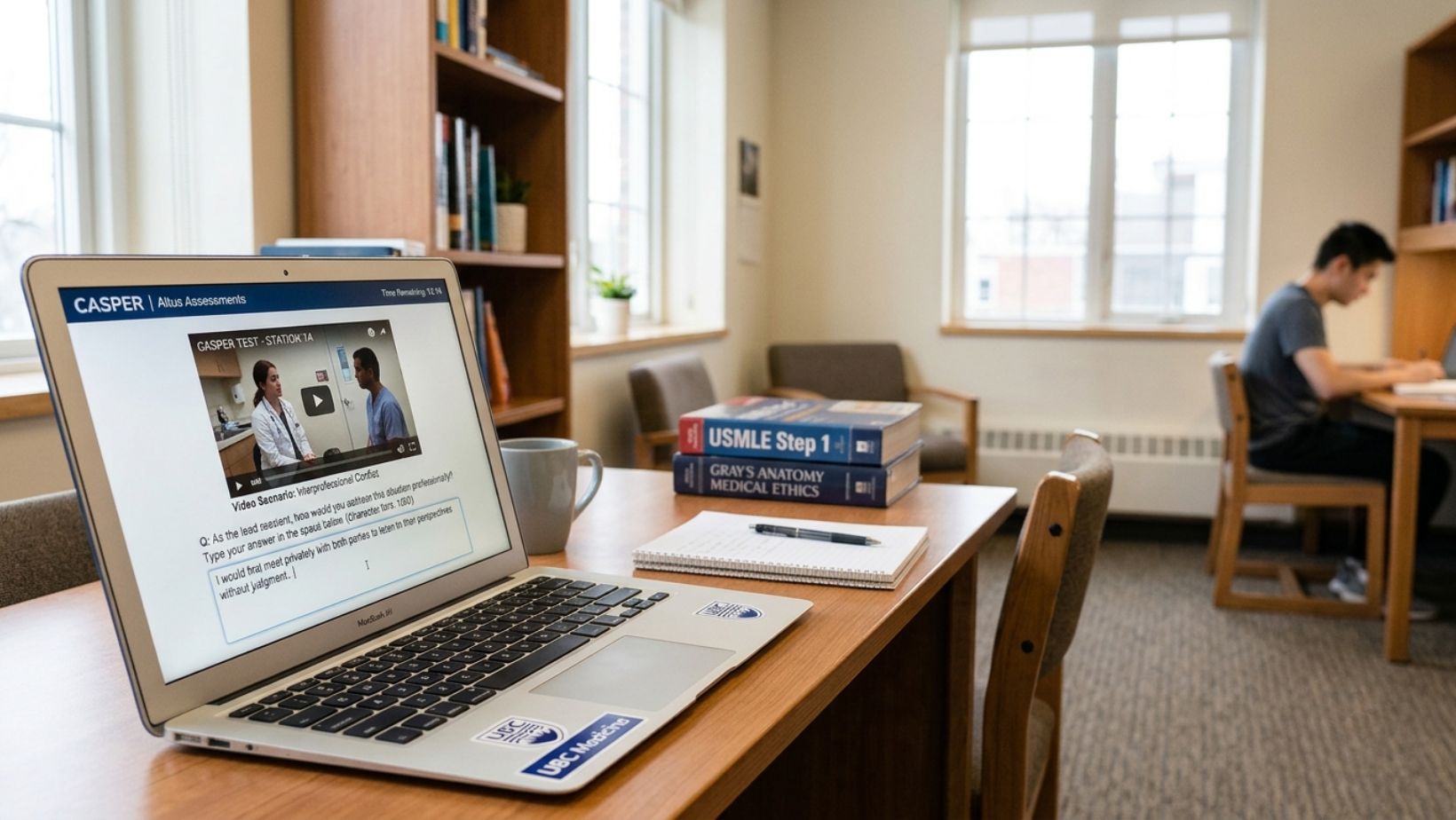
The CASPer test is a timed, online situational judgment test used by medical, dental, nursing, pharmacy, and other health-profession programs to screen applicants on soft skills, things like ethics, empathy, communication, and problem-solving that a GPA or MCAT score simply can’t capture. It’s built and administered by Acuity Insights (formerly Altus Assessments), and it typically runs 65 to 90 minutes across roughly a dozen scenarios, each followed by open-ended typed or video responses.
What surprises a lot of applicants is that the CASPer test isn’t just a medical school hurdle anymore. It has also crept into medical residency selection and other postgraduate health programs, as admissions committees look for a way to evaluate professionalism and judgment before they ever meet a candidate in person. So if you’re picturing this as a “one and done, pre-med only” exam, it’s worth knowing the CASPer test may follow you further into your career than you expect.
What the Research Actually Says About Studying for It
Here’s where things get interesting, because the honest answer is: the evidence is mixed, and it depends what you mean by “studying.”
The official line. Acuity Insights itself states that the CASPer test is designed to be resistant to test prep, meaning you can’t “study up” the way you would for an anatomy final. Their reasoning is that the scenarios test judgment and character traits that develop over years, not weeks.
What independent research shows. A study on CASPer preparation programs for underrepresented applicants found that structured coaching increased participants’ self-perceived competence and confidence when tackling CASPer scenarios and the related CanMEDS roles, even if it didn’t guarantee a specific score bump. In other words, practice didn’t rewrite who these applicants were, but it did help them show who they were more clearly, under pressure, on a clock.
What critics point out. Some researchers, including commentary published on Science-Based Medicine, have pushed back on how much predictive validity data actually exists for the CASPer test, noting that much of the available research comes from studies involving the test’s own co-creators, and that most of it correlates scores with secondary outcomes rather than long-term clinical success. That’s an important caveat: even the people building the test don’t have airtight proof that a higher score means a better future doctor.
What the test’s own technical manual claims. Acuity’s technical documentation states that CASPer has shown an ability to predict certain outcomes, like national licensure exam performance and in-program assessment scores, across multiple studies, sometimes years later. So while the picture isn’t perfectly clean, there is more than zero evidence behind it.
Put those threads together and you get a nuanced answer: the CASPer test rewards who you already are, but preparation still matters because a nervous, rushed, or poorly organized response under a countdown clock doesn’t reflect your judgment nearly as well as a calm, structured one does. In short, the CASPer test isn’t asking you to become a different person in two weeks; it’s asking you to present the person you already are as clearly as possible.
Why “Studying” for CASPer Looks Different Than You Think

This is the part that trips people up. You’re not memorizing content for the CASPer test. There’s no textbook, no formula sheet, nothing to cram the night before. What actually moves the needle is:
- Timing practice. You get roughly one minute per video response and about three and a half minutes to answer two questions per typed scenario. If test day is the first time you’ve felt that clock ticking, panic eats into your answer quality.
- Understanding the competencies. Raters score you on things like empathy, ethics, collaboration, and problem-solving. Knowing what they’re looking for helps you structure an answer instead of rambling.
- Reviewing CASPer test examples. Working through realistic scenarios beforehand the kind involving conflicts between coworkers, ethical gray areas, or difficult patient interactions trains your brain to recognize the “shape” of a good answer quickly, instead of freezing when the scenario loads.
- Getting feedback. A second set of eyes, whether a mentor, a peer, or a formal program, catches blind spots you can’t see in your own writing.
None of that is “cheating” the test. It’s the same reason a medical student rehearses a mock patient interview before a real one familiarity with the format frees up mental bandwidth for the actual judgment call.
Whatever your starting point, remember that the CASPer test measures how you handle pressure just as much as what you say.
Who Actually Needs to Prepare More Seriously
Not everyone needs the same level of prep. If English isn’t your first language, if you tend to freeze on camera, or if you’ve never taken a timed situational judgment test before, you’re likely to benefit more from structured practice than someone who’s naturally quick on their feet and comfortable being recorded. This is exactly the gap that many med consultants try to fill offering mock scenarios, personalized feedback, and realistic timing drills so applicants walk into the CASPer test familiar with the format rather than encountering it cold on test day.
So, Do You Need to Study for the CASPer Test?
Based on everything above, here’s the honest, data-informed answer: you don’t need to “study” the CASPer test the way you study organic chemistry, but you absolutely should prepare for it. That means:
- Spend one to two weeks, not months, on focused practice.
- Do a handful of timed practice scenarios so the format isn’t a surprise.
- Learn the competencies raters are scoring you on.
- Get outside feedback on at least a few of your responses.
- Practice thinking out loud on camera if video responses make you nervous.
Skipping prep entirely leaves your score more exposed to nerves and unfamiliarity than it needs to be. Over-preparing trying to script “perfect” answers for every possible scenario can actually backfire, since raters are trained to spot canned, inauthentic responses. The sweet spot is light, targeted, format-focused practice.
Ready to Prepare the Smart Way?
If you want structured guidance instead of guessing your way through practice scenarios, working with a team that specializes in this exact test can save you weeks of trial and error. MDconsultants Prep offers CASPer test coaching built around real scoring competencies, timed mock scenarios, and personalized feedback so you walk into your CASPer test appointment prepared, not just hopeful.